
The 100-fold puzzle
Go for a long, hard workout and the level of a signaling protein called IL-6 in your blood can rise as much as 100 times. That should be alarming. IL-6 is one of the markers tied to chronic inflammation, and high levels go along with obesity and with the body handling insulin poorly.
So for years, scientists had a puzzle. If exercise calms inflammation, why does it flood your blood with an inflammation signal?
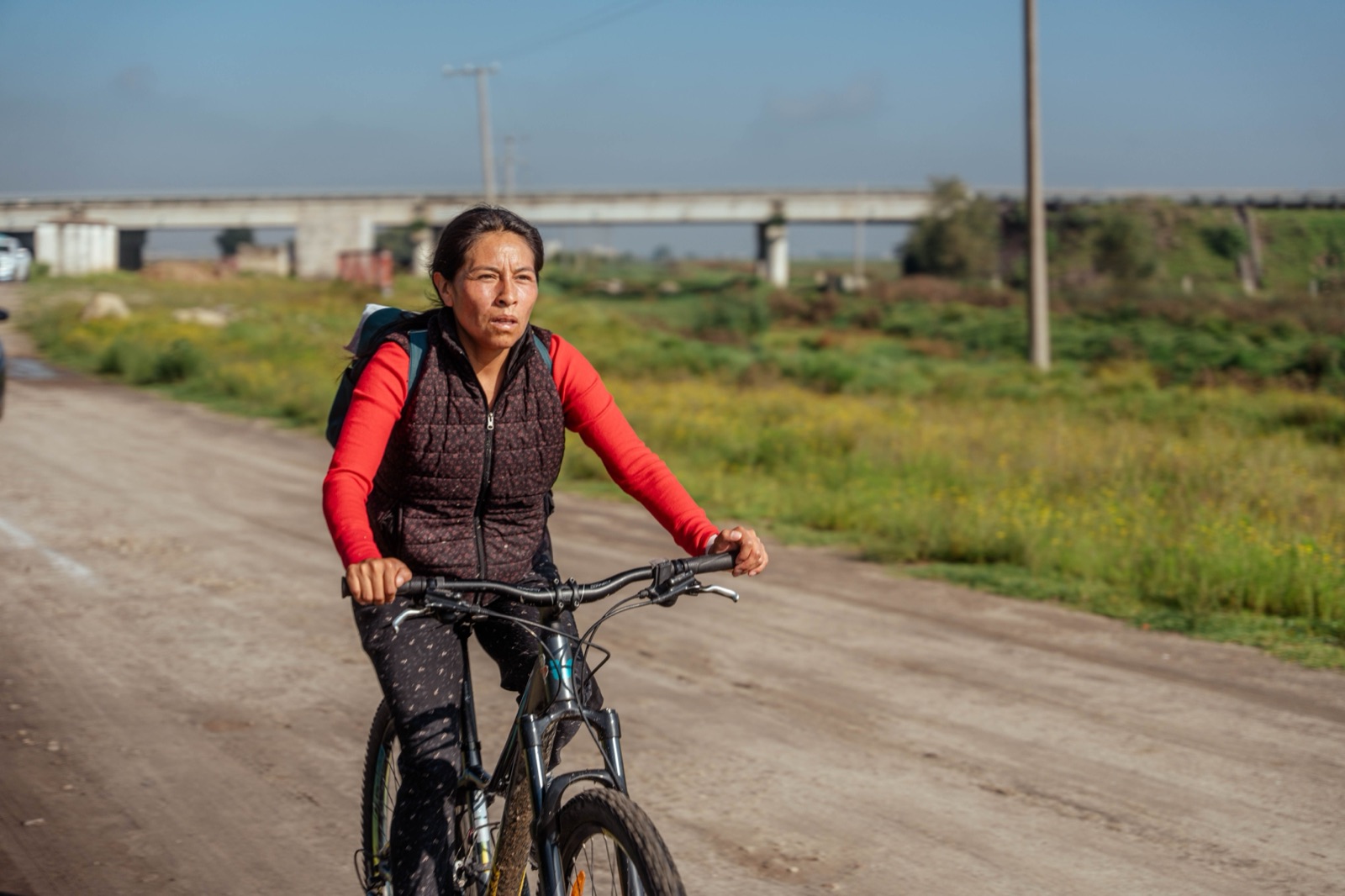
The answer starts with where the IL-6 comes from. During exercise, your working muscles make it and release it, and the rise comes at a time when your body is using insulin better, not worse. Scientists now call signals like this "myokines": messages your muscles send to the rest of your body.
A 2026 trial added detail. Researchers measured blood flowing into and out of the working leg, the liver and gut region, and the brain while 30 well-trained young men cycled at a moderate pace. The leg muscles released IL-6, and the liver and gut region cleared most of it back out.
So a short spike during a workout is your body working as designed. Chronic inflammation is something else: a low level that stays up for months or years, and a hallmark of heart disease, metabolic disorders and some cancers. That is the kind this article is about.
What the biggest review found
In 2026, a research team gathered every meta-analysis they could find on exercise and inflammation markers, published up to January 2026. A meta-analysis pools the results of many studies. They found 61 of them, covering 318 separate results across different groups of people and different markers.
The good news: in most chronic diseases, exercise showed a clear trend toward less inflammation. In people with a chronic disease, lower CRP, IL-6 and TNF-alpha are generally read as a lighter inflammatory load on the body.
The catch: only 145 of the 318 results (46%) showed a clear effect. When the team graded how trustworthy the evidence was, just 10 results (3%) rated high, 89 (28%) rated moderate, and 219 (69%) rated low or very low.
The authors were blunt about what that means. Their findings, they wrote, should be treated as ideas for future research, not as practice guidelines. That honesty is rare, and it is why we grade this topic Moderate instead of Strong.
Strength training has the clearest record
Of all the evidence we checked, strength training stood out. A 2026 meta-analysis pooled 36 randomized trials in older adults. Strength training lowered a group of inflammation markers that includes CRP, IL-6 and TNF-alpha, and it raised anti-inflammatory ones. The effects were bigger when people trained at least 3 times a week, with weights of at least 70% of the most they could lift once.
Three sessions a week, with weights that feel hard, is where the trials saw the most.From a 2026 meta-analysis of 36 randomized trials
An earlier meta-analysis of 12 studies in middle-aged and older adults found the same for CRP. Moderate strength training 3 times a week lowered it in programs of 6 to 12 weeks and 16 to 32 weeks.
Cardio helps, but the CRP picture is mixed
In healthy adults, a meta-analysis of 15 studies with 1,160 people found that aerobic exercise lowered TNF-alpha. CRP and IL-6 did not change in a meaningful way.
Effort may matter over time. Across 27 trials that compared harder and easier exercise, harder workouts did not move most markers more. But in middle-aged adults, and in programs longer than 9 weeks, harder training lowered CRP more than easier training.
Not everyone's numbers moved
In 26 trials of older adults with frailty or major muscle loss (sarcopenia), exercise lowered TNF-alpha but not IL-6 or CRP. And for people with COPD or fibromyalgia, exercise may briefly raise some inflammation markers.

A lifetime of movement
What about people who never stopped? A 2025 review compared "masters athletes," people who have trained for most of their lives, with untrained people their own age. The lifelong exercisers had lower CRP and higher levels of IL-10, a signal that calms inflammation. They still did not match untrained young adults on every marker. These studies compare groups at one point in time, so they show a link, not proof that the training caused it.

What this means for you
Tick what you'll try this week. Your picks stay on this device.
you have heart or lung disease (including COPD), fibromyalgia, or a joint problem you are being treated for; you get chest pain, dizziness or unusual shortness of breath when you exercise; you have had a recent surgery or fall; or you are new to lifting heavy weights.
One tap. Results appear once 50 readers have voted, and the count is always real.
The bottom line
Your muscles talk to the rest of your body every time you use them. Mid-ride, that sounds like a spike. Over months of steady training, in trial after trial, it starts to look like a quieter background, especially for people living with a chronic disease. The research is noisier than the headlines, and the 2026 review says so plainly. But the direction holds. The clearest signal points to something you can start this week: lift, three times a week, and keep going.
Ask the Research Desk
Heard something about inflammation you want checked? The best questions become articles, credited by first name only if you say yes.
How this article was made
Researched and written from 9 peer-reviewed papers. Our automated check matched every claim against the exact words of its source, confirmed every paper exists in PubMed, and found none retracted. Checked October 30, 2026. Not individually reviewed by a doctor. Photos are illustrative; the people in them are not patients or readers.
Grades run Strong, Moderate, Emerging, Early and Not supported, and the grade decides the words we may use. How we grade evidence · Medical disclaimer
Sources
- Umbrella reviewThe impact of exercise on inflammatory biomarkers: an umbrella review of systematic reviews and meta-analyses.Zhang W, Du M, Zhang Z et al. Front Immunol, 2026.PubMedFull paper
- Randomized trialAutocrine signaling may regulate exercise-induced interleukin-6 release from human skeletal muscle.Hvidemose JO, Trinh B, Vassilieva A et al. Mol Metab, 2026.PubMedFull paper
- ReviewMuscle as an endocrine organ: focus on muscle-derived interleukin-6.Pedersen BK, Febbraio MA Physiol Rev, 2008.PubMedFull paper
- Meta-analysisThe effect of exercise intensity on chronic inflammation: A systematic review and meta-analysis.Rose GL, Skinner TL, Mielke GI et al. J Sci Med Sport, 2021.PubMedFull paper
- Meta-analysisDose-response relationship of resistance training and the effects on circulating biomarkers of inflammation or neuroplasticity in older adults: A systematic review and meta-analysis.Qipo O, Gajauskaitė G, Vints WAJ et al. Ageing Res Rev, 2026.PubMedFull paper
- Meta-analysisDoes Lifelong Exercise Counteract Low-Grade Inflammation Associated with Aging? A Systematic Review and Meta-Analysis.Pérez-Castillo IM, Rueda R, Bouzamondo H et al. Sports Med, 2025.PubMedFull paper
- Meta-analysisEffect of resistance training on inflammatory markers in middle-aged and older adults: A meta-analysis.Cheng X, Yang Z Arch Gerontol Geriatr, 2024.PubMedFull paper
- Meta-analysisEffects of exercise interventions on inflammatory biomarker levels in older adults with frailty and/or sarcopenia: a systematic review and meta-analysis.Chu R, Xie Y, Li W et al. Front Immunol, 2026.PubMedFull paper
- Meta-analysisEffects of aerobic exercise on inflammatory factors in healthy adults: a meta-analysis.Wang YH, Luo DL, Jiang HC et al. Eur Rev Med Pharmacol Sci, 2022.PubMedFull paper